creation date: 2026-09-03 14:32
tags: Interventions
Prescribing Antibiotics
The approach to antibiotics use is described here. For antibiotic classes, see here.
Necessity of Antibiotics
The patient should have an infection that require antibiotic use. Confirm a infectious diagnosis, especially in cases refractory to treatment.
When counselling patients, the following points may aid in convincing them antibiotics are unnecessary. Inappropriate antibiotics use can lead to:
- Adverse reactions and side effects
- Secondary infections (incl. C. difficile)
- Promotion of drug-resistant organisms
Microbes / Organisms
Determination of organisms can be made via culture or treatment can be empiric.
Cultures are indicated for the following:
- Sputum: severe CAP, previous MRSA/Pseudomonas, recent abx (past 90 days)
- Urine: pyelonephritis, recurrent cystitis, pregnancy, complicated urologic cases, pre-urologic procedure with bleeding
- Never send if asymptomatic (no irritative symptoms)
- For foley catheters, look for purulent discharge around catheter
- Blood: suspected bacteremia (high risk infections such as meningitis, epidural abscesses, nontraumatic septic arthritis; instrumentation and prosthetics )
- Note risk of contamination (3-5%) leading to unnecessary treatment
- Skin swab: purulent skin infections, concern for MRSA
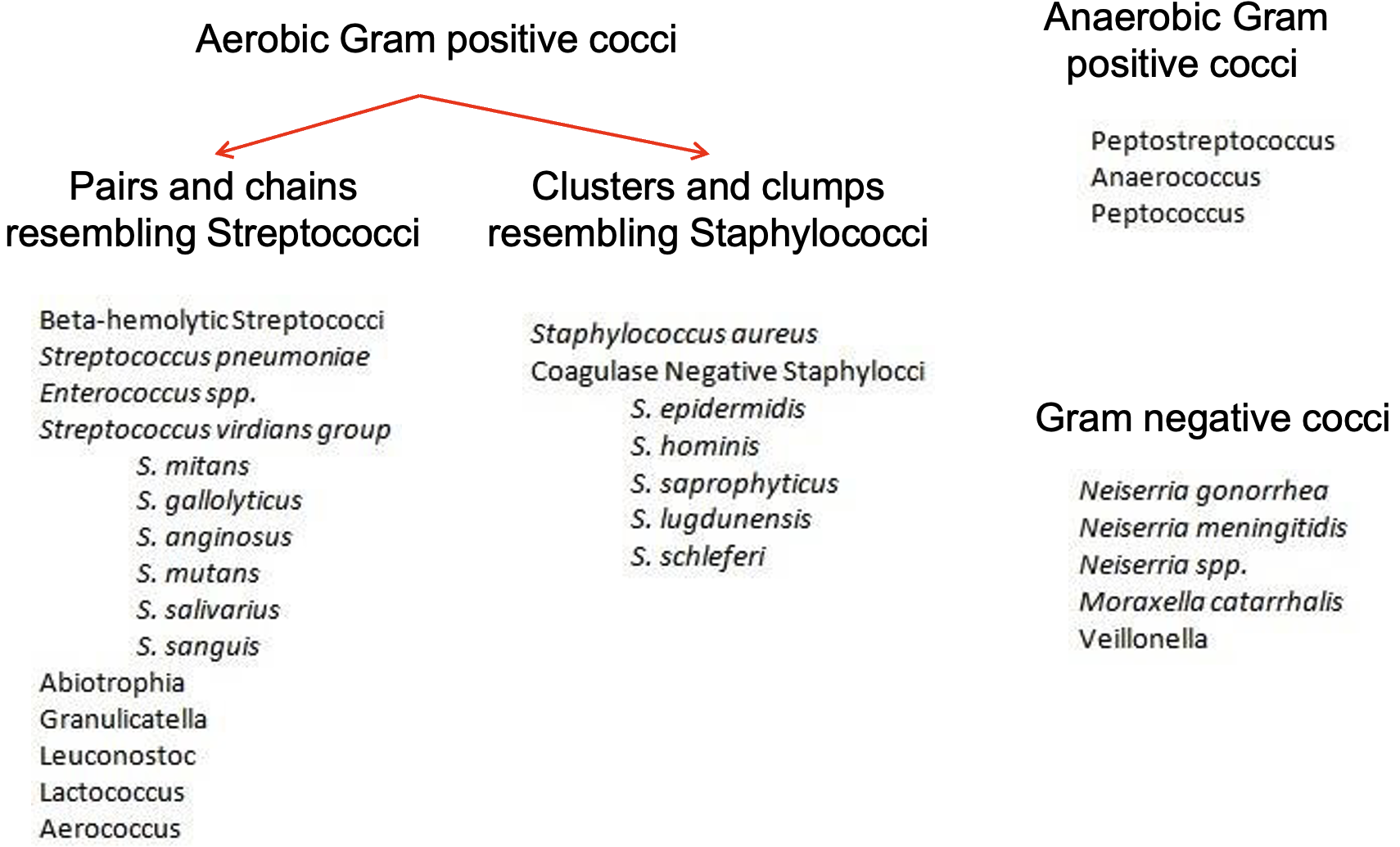
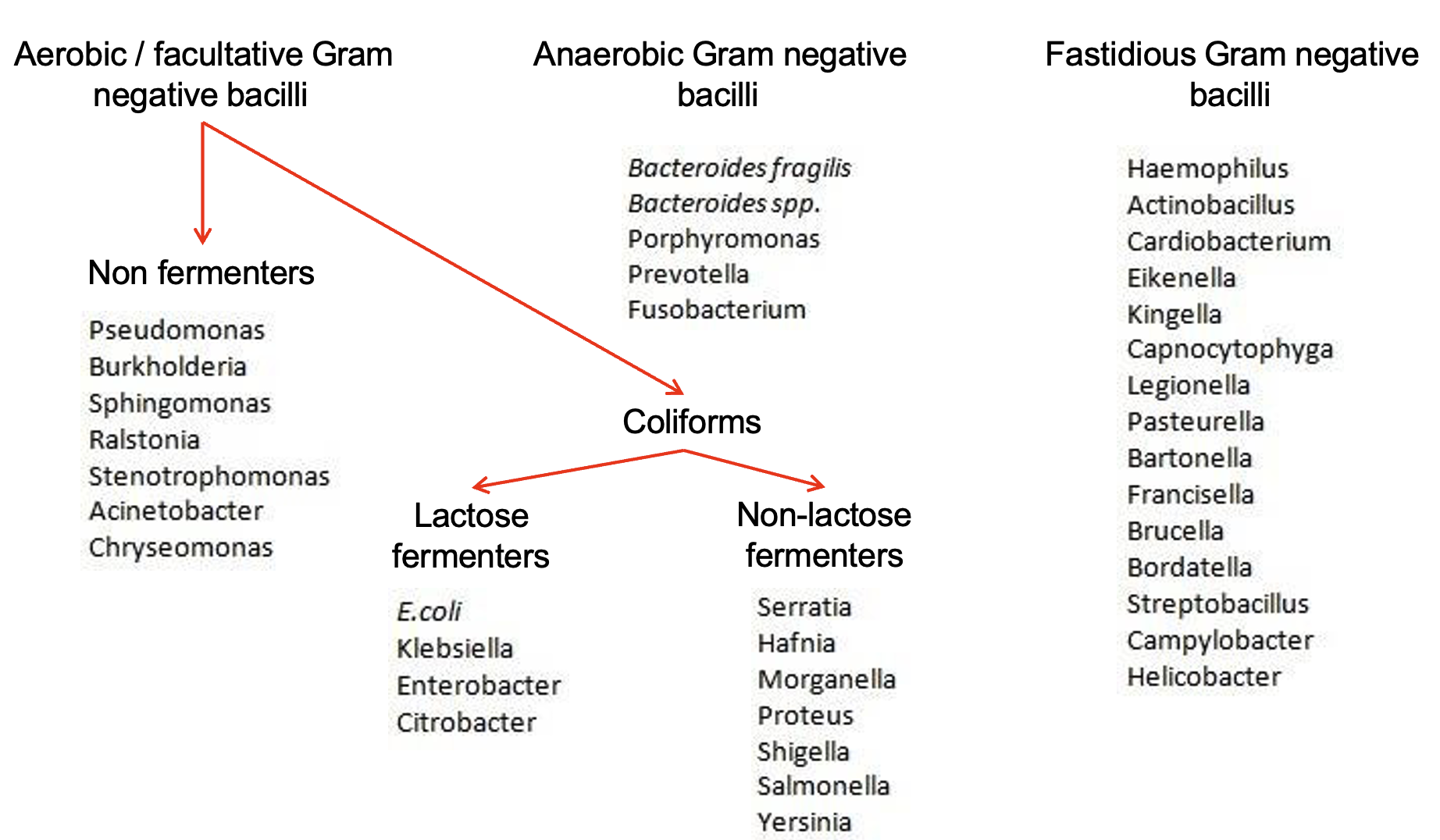
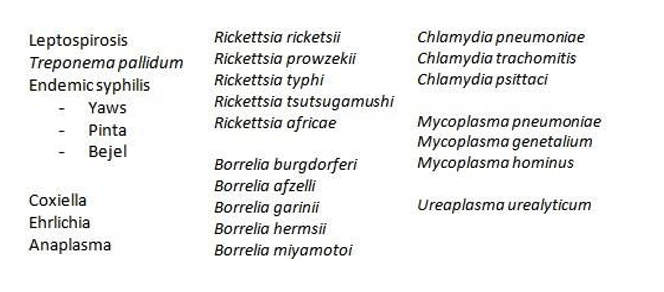
By Gram Stain
Gram Positive Cocci
Gram Positive Bacilli

Gram Negative Bacilli
Non-Gram Staining Bacteria
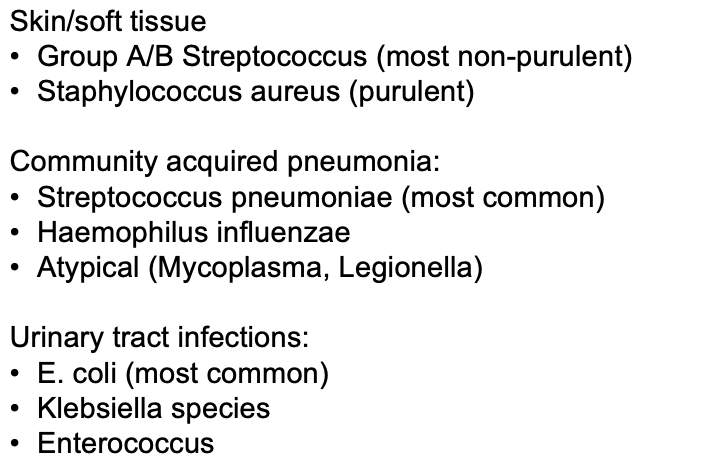
By Infection Site
Antibiotic Options
Skin and Soft Tissue Infection
Mild-moderate, purulent or non-purulent can be treated outpatient:
- Cephalexin or cefadroxil (same coverage except cephalexin QID vs cefadroxil BID (preferred))
- Cefuroxime if penicillin allergy
- TMP-SMX if MRSA risk factors
Cystitis (Uncomplicated)
Treated outpatient:
- Refer to previous cultures for resistance patterns
- First line:
- Nitrofurantoin x 5 days
- TMP-SMX x 3 days
- Fosfomycin x 1-2 doses (less effective)
- Second line:
- Ciprofloxacin
- Beta-lactams
Community Acquired Pneumonia
For a healthy patient, outpatient treatment is:
- Amoxicillin
- Doxycycline (note: teratogen)
- Azithromycin (in some communities, depending on biogram)
For patient with comorbidities, outpatient treatment is:
- Amoxicillin with clauvlanic acid
- Cefuroxime PLUS doxycycline or azithromycin (for legionella/atypical)
- Levofloxacin/moxifloxacin (one-drug option, more side effects)
Sepsis
Options vary based on most likely source of infection.
CAP
- Ceftriaxone 2g IV + azithromycin 500 mg PO/IV
- Levofloxacin 750mg PO/IV or moxifloxacin 400mg PO/IV
UTI
- Ceftriaxone 2g IV
- Ertapenem 1g IV (if resistance suspected)
Intraabdominal Infection
- Ceftriaxone 2g IV + metronidazole 500mg PO/IV
- Amoxicillin-clavulanate 2000mg/200mg IV
- Piperacillin-tazobactam 3.375g IV
- Ciprofloxacin 400mg PO/IV + metronidazole 500mg PO/IV
Acute soft-tissue/bone/joint
- Cefazolin 2g IV
Infective endocarditis
- Vancomycin 20 mg/kg IV + ceftriaxone 2g IV
Central venous catheter
- Vancomycin 20 mg/kg IV + ceftazidime 2g IV + remove line
Necrotizing fasciitis (type 1 - polymicrobial)
- Piperacillin-tazobactam 4.5 g IV
- Clindamycin 900 mg IV
Necrotizing fasciitis (type 2 - monomicrobial)
- Penicillin G 4M IU IV + clindamycin 900mg IV
Diabetic foot infection (localized, no high-risk factors)
- Cefazolin 2g IV
Febrile neutropenia
- Piperacillin-tazobactam 4.5 g IV
Meningitis
- FIRST: dexamethasone 10 mg
- THEN ceftriaxone 2g IV or vancomycin 20 mg/kg IV
- ± ampicillin 2g IV
Antibiotic Route / Duration / De-escalation
Reassess the situation:
- Review initial diagnosis / clinical status
- Narrow antimicrobials as appropriate based on culture results
Change IV to PO if:
- Vital signs normalizes
- Condition does not need longer IV treatment
- Able to swallow and absorb medications
- No resistance needing IV therapy
Many antibiotics have good bioavailability (equivalence PO to IV). Examples:
- Amoxicillin 250-1000mg q8h
- Clindamycin 300-600mg q8h
- Ciprofloxacin 250-750mg q12h
- Doxycycline 100mg q12h
- Levofloxacin 500-750mg q24h
- Moxifloxacin 400mg q24h
- Linezolid 600mg q12h
- TMP-SMX 160/800mg q12h
- Metronidazole 500mg q12h
Antibiotics can often be prescribed with shorter durations with the same effectiveness:
- CAP: 5 days (3 if symptoms resolved)
- SSTI: 5 days
- UTI 3 days (septra/cipro), 5 days other abx
Exceptions to shorter duration are:
- Otitis media for <2 years old
- Strep throat with penicillin